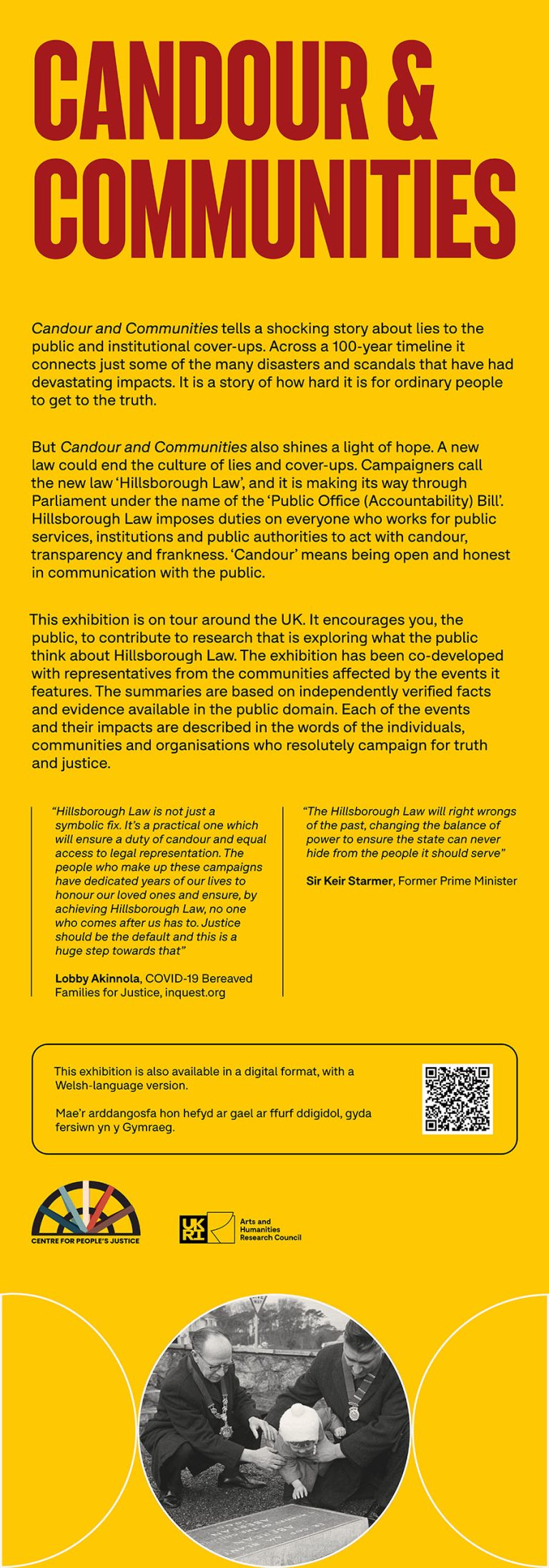
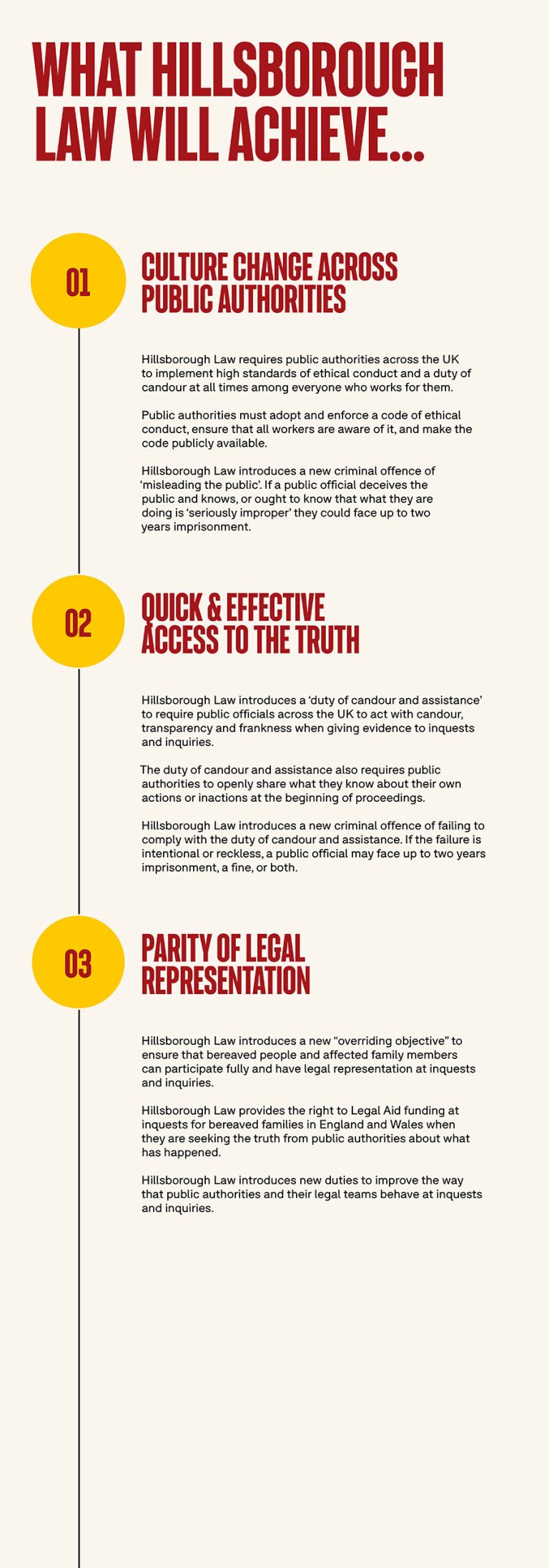
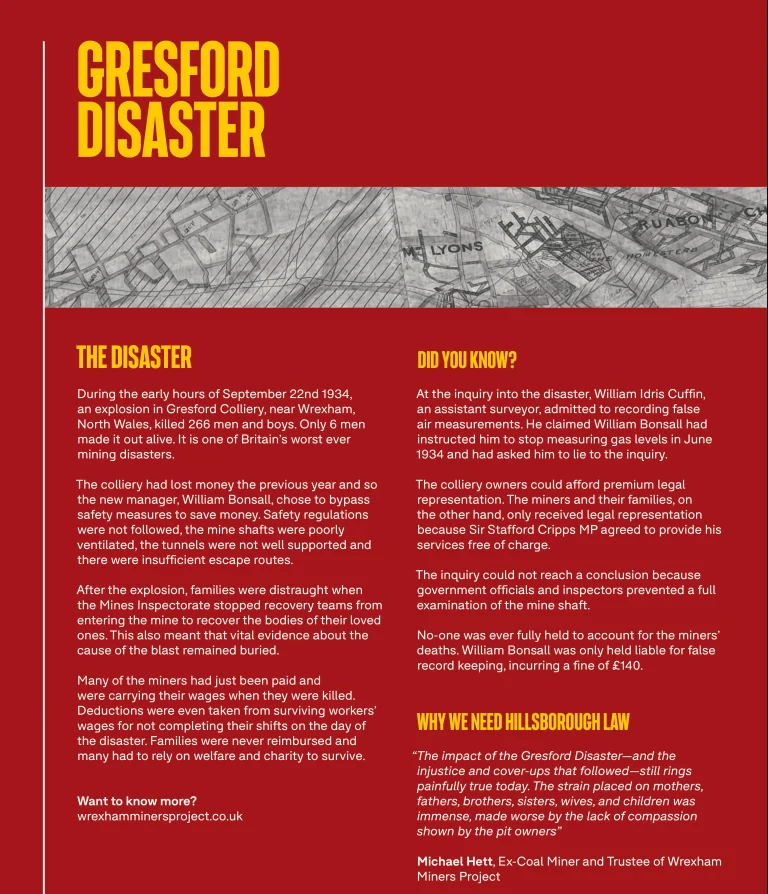
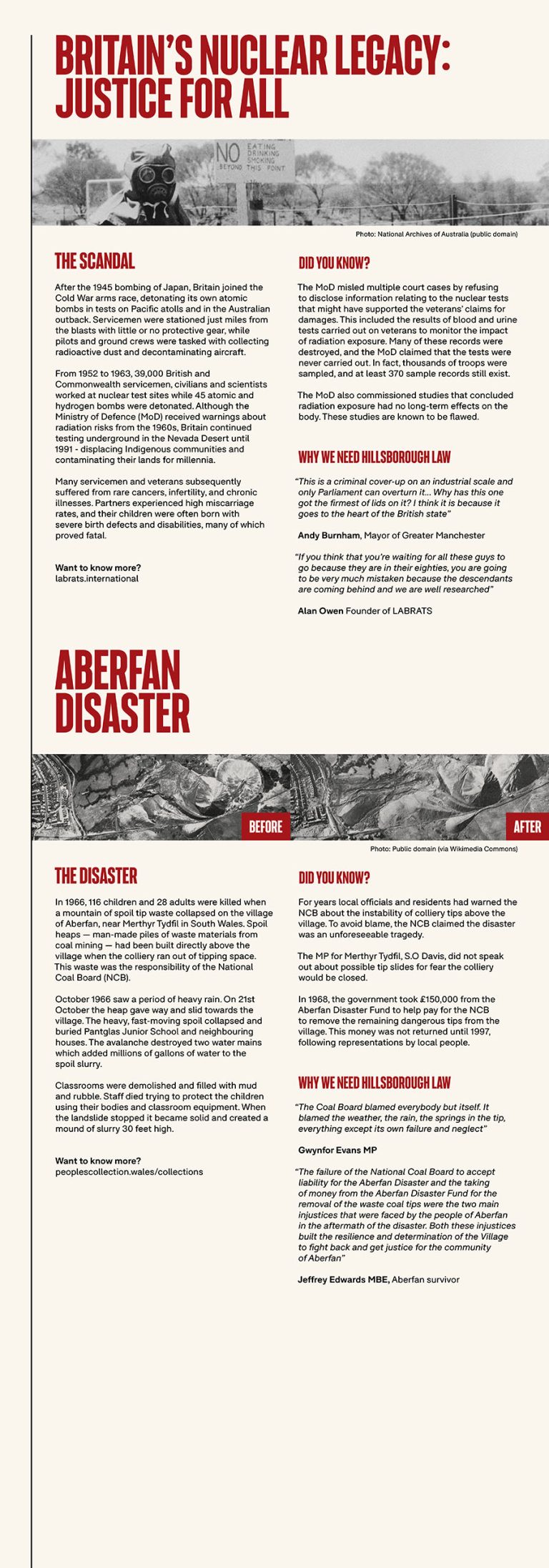
Part of the Candour & Communities exhibition
Bloody Sunday
The scandal
On 30th January 1972, around 15,000 people joined a peaceful march in Derry to protest against the British policy of imprisoning civilians without charge or trial.
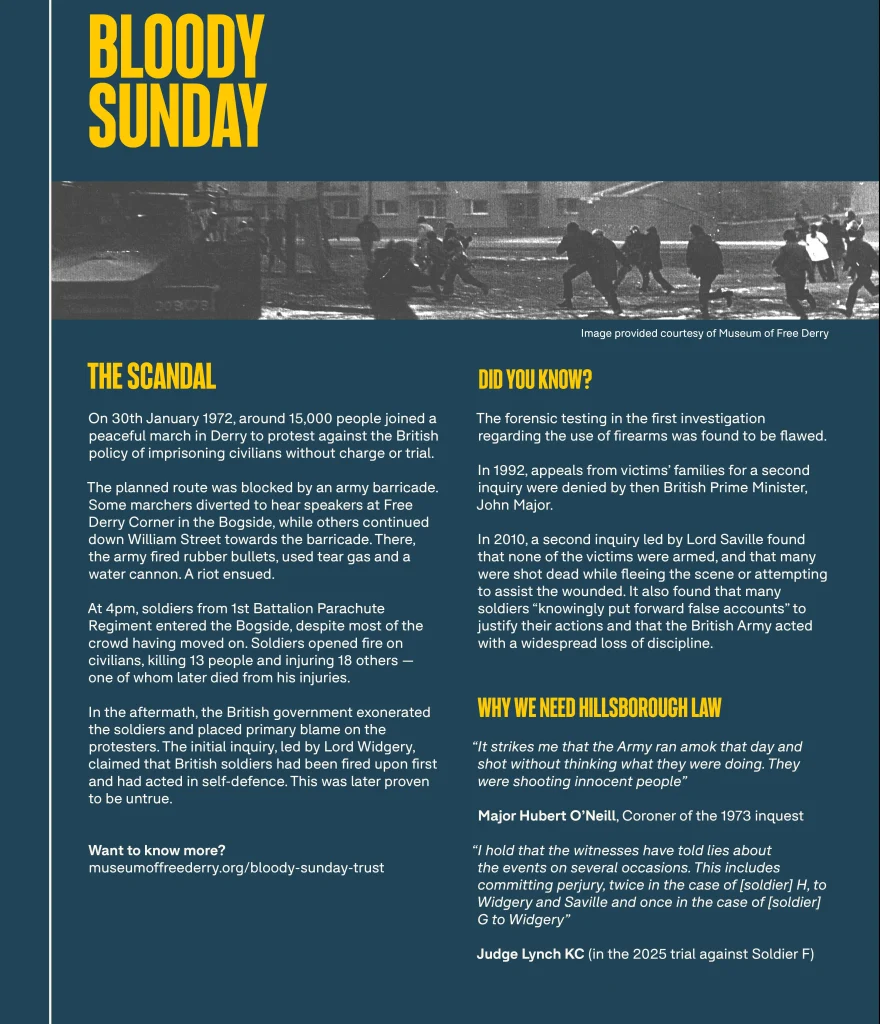
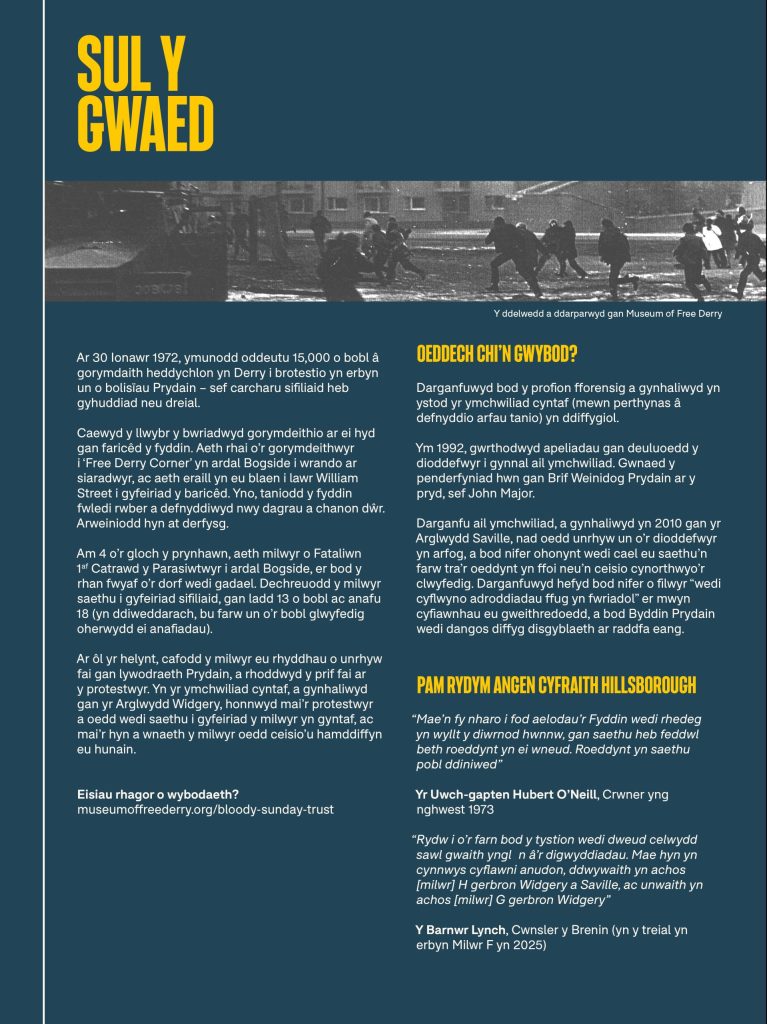
The planned route was blocked by an army barricade. Some marchers diverted to hear speakers at Free Derry Corner in the Bogside, while others continued down William Street towards the barricade. There, the army fired rubber bullets, used tear gas and a water cannon. A riot ensued.
At 4pm, soldiers from 1st Battalion Parachute Regiment entered the Bogside, despite most of the crowd having moved on. Soldiers opened fire on civilians, killing 13 people and injuring 18 others — one of whom later died from his injuries.
In the aftermath, the British government exonerated the soldiers and placed primary blame on the protesters. The initial inquiry, led by Lord Widgery, claimed that British soldiers had been fired upon first and had acted in self-defence. This was later proven to be untrue.
Want to know more? museumoffreederry.org/bloody-sunday-trust
Did You Know?
The forensic testing in the first investigation regarding the use of firearms was found to be flawed.
In 1992, appeals from victims’ families for a second inquiry were denied by then British Prime Minister, John Major.
In 2010, a second inquiry led by Lord Saville found that none of the victims were armed, and that many were shot dead while fleeing the scene or attempting to assist the wounded. It also found that many soldiers “knowingly put forward false accounts” to justify their actions and that the British Army acted with a widespread loss of discipline.
Why We Need Hillsborough Law
“It strikes me that the Army ran amok that day and shot without thinking what they were doing. They were shooting innocent people”
Major Hubert O’Neill, Coroner of the 1973 inquest
“I hold that the witnesses have told lies about the events on several occasions. This includes committing perjury, twice in the case of [soldier] H, to Widgery and Saville and once in the case of [soldier] G to Widgery”
Judge Lynch KC (in the 2025 trial against Soldier F)
Related Exhibitions
Explore our other digital exhibitions.